7 Rules To Get A Free Government Smartphone Right Now
Learn the 7 concrete federal rules to secure a free smartphone and service through verified government programs without falling for online scams.
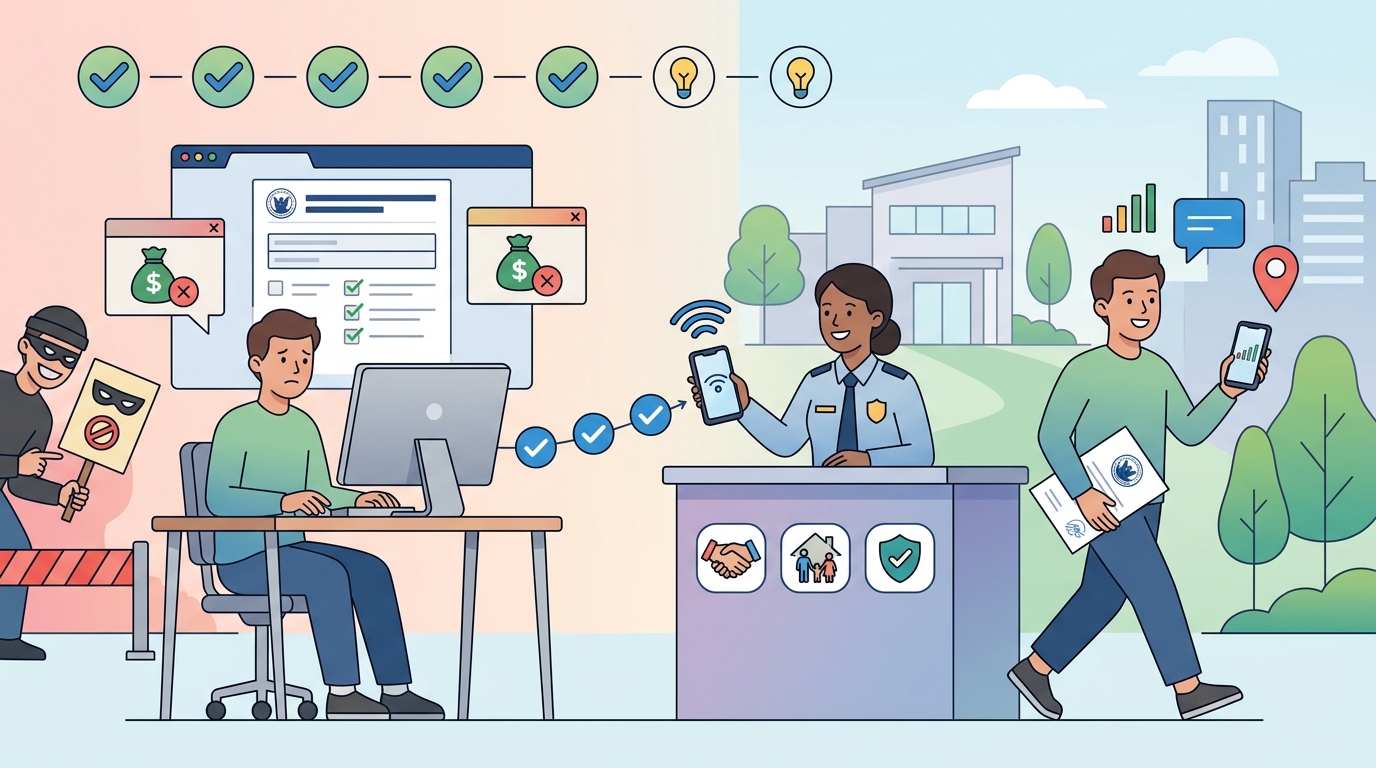
Social media platforms like Meta display frequent advertisements offering free smartphones and free monthly cellular plans to qualified users. Millions of Americans qualify for these connectivity benefits through federal assistance programs, but navigating the real application process requires knowing official regulations (Source 1).
While legitimate programs exist to keep low-income households connected, aggressive marketing and deceptive online scams frequently target mobile users (Source 2). The following seven rules explain exactly how to qualify for a free device legally while avoiding paid tricks.
Rule 1: Check If Your Household Income Is Under 135 Percent
The most direct way to qualify for a free smartphone program is through your household income. Under the federal Lifeline program guidelines, your total gross household income must be at or below 135% of the Federal Poverty Guidelines (Source 1). This percentage is adjusted based on your total household size and location (Source 1).
A household includes anyone living at the same address who shares income and household expenses (Source 1). If you live with roommates who manage their own finances independently, they count as separate economic households (Source 1). Measuring your income accurately requires looking at tax returns or recent pay stubs before submitting any application form.
Rule 2: Qualify Automatically Through Federal Assistance Programs
If your income exceeds the 135% boundary, you can still automatically qualify for a free smartphone if you participate in specific federal benefit programs (Source 1). The federal government connects program enrollment directly to telecommunication assistance (Source 3).
Participation in any of the following federal programs grants immediate eligibility (Source 1):
- Supplemental Nutrition Assistance Program (SNAP)
- Medicaid
- Supplemental Security Income (SSI)
- Federal Public Housing Assistance (FPHA)
- Veterans Pension and Survivors Benefit
- Qualifying Tribal assistance programs (such as Bureau of Indian Affairs General Assistance or Tribal TANF)
Rule 3: Enforce the One Benefit Per Household Limit
Federal rules strictly enforce a limit of one Lifeline benefit per household (Source 1). This means an entire family unit living together can receive only one monthly discount or free phone line, not one per person (Source 1).
Attempting to sign up multiple members of the same household for duplicate benefits can result in total disqualification from the program (Source 1). If two separate families live in the same physical building or multi-unit housing structure, each independent financial unit must complete an official household worksheet during enrollment to prove they are separate households (Source 1).
Rule 4: Avoid Upfront Fees Promoted in Deceptive Meta Ads
Many advertisements on social media claim to offer free high-end smartphones but redirect users to third-party sites asking for credit card processing fees or shipping charges. According to the Federal Trade Commission (FTC), legitimate government benefit programs and authorized providers never require you to pay upfront fees or enter payment details to receive assistance (Source 2).
Scammers often create landing pages that mimic official government agencies or popular wireless carriers (Source 2). To keep your personal data safe, follow these FTC safety practices when interacting with social media ads:
- Never provide credit card numbers or banking passwords to claim a government benefit (Source 2).
- Verify that any company offering service is an official authorized Lifeline provider before submitting personal identity details (Source 1).
- Avoid clicking shortened links that do not lead directly to official administrative portals or recognized carrier sites (Source 2).
Overview of Qualification Pathways and Guidelines
The federal government establishes unified standards to evaluate household eligibility across all states and territories (Source 1, Source 3). The table below outlines key benchmark criteria for evaluation.
| Qualification Pathway | Primary Requirement | Key Documentation Needed |
|---|---|---|
| Income-Based | Gross income at or below 135% of Federal Poverty Guidelines | Tax returns, pay stubs, or state unemployment statements (Source 1) |
| Program-Based | Current participation in SNAP, Medicaid, SSI, or FPHA | Official award letter or approval statement (Source 1) |
| Tribal-Based | Participation in Tribal-specific assistance programs | Tribal card, letter of participation, or agency record (Source 1) |
Rule 5: Submit Official Verification Documents
To secure approval through the centralized National Verifier system, applicants must provide identity and eligibility documentation (Source 1). You cannot qualify based on self-declaration alone; valid paperwork must be uploaded or mailed during the application process (Source 1).
Required documents usually include a government-issued photo ID (such as a driver's license or passport) to confirm your identity and address (Source 1). To verify program enrollment, you must supply an unexpired benefit card, official award letter, or statement of benefits dated within the last 12 months (Source 1).
Rule 6: Recertify Your Eligibility Every Year
Receiving a free smartphone or monthly discount is not a permanent arrangement. Federal regulations require all Lifeline recipients to recertify their eligibility once every 12 months (Source 1).
In many cases, automated database checks handle recertification automatically behind the scenes (Source 1). However, if your status cannot be verified automatically through state databases, you will receive a notice giving you 60 days to submit current proof of income or program participation (Source 1). Failing to respond within this timeframe results in automatic deenrollment and loss of service (Source 1).
Rule 7: Apply Directly Through Authorized Lifeline Carriers
Instead of clicking through third-party ad intermediaries, users should complete their enrollment directly through official administration sites or authorized telecommunications companies (Source 1). The Universal Service Administrative Company (USAC) operates the official public portal for managing benefits (Source 1).
You can visit the official National Verifier website directly at LifelineSupport.org to fill out your application online (Source 1). Once approved by the National Verifier, you select an authorized participating service provider in your area to receive your discounted or free device and active wireless plan (Source 1).
Are free smartphones really completely free?
Legitimate government assistance programs like Lifeline provide free or heavily subsidized monthly phone service to eligible households (Source 1). Many participating carriers bundle a free basic smartphone with the service plan, provided you do not pay upfront fees or shipping costs (Source 1, Source 2).
Can I get a free phone if I already have phone service?
Yes, but you must transfer your Lifeline benefit to the new provider, because federal rules limit benefits to one per household across all service providers (Source 1).
What should I do if a Meta ad asks for payment to claim a free phone?
Close the advertisement immediately. The FTC warns that genuine government programs and authorized benefit distribution channels do not charge fees to receive benefits (Source 2).
Sources
- Do I Qualify for Lifeline? — Universal Service Administrative Company
- Avoid Scams — Federal Trade Commission
- Government Benefits and Financial Assistance — USAGov
This article is for general information only and is not professional advice. Figures come from public sources and change over time; check the official source before you act.
More from Daily Facts Wire
- Get Your Free Smartphone Through Federal Lifeline and Meta Promo Rules
- 4 Costly Mistakes People Make Claiming Free Phones On Facebook
- The $35 Hidden Activation Fee Inside Free Meta Phone Offers
- 7 Rules To Get A Free Government Smartphone Right Now
- International Medical Travel Insurance: Emergency Evacuation, Coverage Limits, and Claims
- Fiduciary Financial Advisor Fees: Fee-Only vs. Fee-Based Models and AUM Pricing